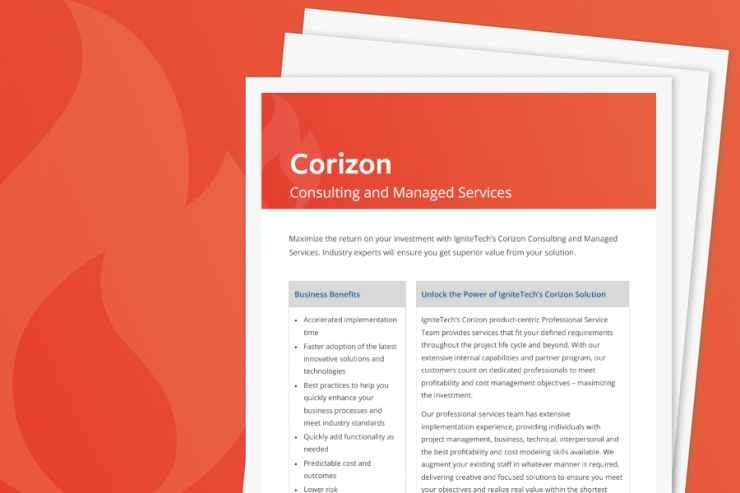
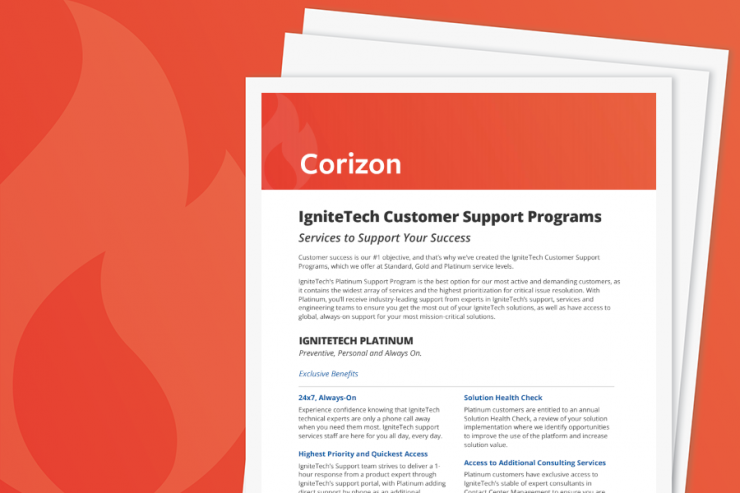
Corizon is a mashup platform that simplifies assembly of composite applications for end users. Visual user interfaces from applications are converted into consumable UI services providing easy-to-integrate use-cases, including improving contact center agent effectiveness and unified desktop development.
Why Corizon?
- Mashup Technology
Corizon enables simple, efficient access to all valuable call center information, leading to more productive agents and ultimately happier customers.
- UI Innovation
Purpose-built for UI challenges, Corizon enables business users to quickly define, implement and manage optimized processes through visual composition.
- CCT Integration
As the only mashup solution built with Contact Center Technology (CCT) in mind, Corizon seamlessly integrates with unified communication services such as Avaya Telephony.
COMPLEMENTARY IGNITETECH UNLIMITED SOLUTIONS
Check out the solutions below, available free as part of your Corizon subscription:
AlertFind
AlertFind
Enterprise notifications to communicate important information, monitor responses and verify staff safety.
Kayako
Kayako
Deliver exceptional customer service in multiple languages across live chat, email, Facebook and Twitter.
Blog Posts

Dec 23, 2023
How to build a strong customer culture in your company
Explore the essentials of building a strong customer culture in our latest blog post. Learn the…
Sep 23, 2022
IgniteTech ‘Turbo-Charges’ BryterCX, Journey Intelligence Industry with Predictive Analytics Capabilities
IgniteTech today announced the integration of Iris InsightsTM into its BryterCX Journey Intelligence…

Jul 27, 2022
4 Customer Service Approaches To Wow Millennials and Gen Zs
Millennials and Gen Zs have unique preferences regarding customer experience. Learn the best…
Jan 27, 2022
IgniteTech Expands CX Software Portfolio With Acquisition of BryterCX Assets
IgniteTech today announced that a definitive agreement has been signed by all parties for the…

Sep 17, 2021
Tapping Into the Voice of the Customer
To cater to your customers you need to understand their needs at a deep level. A Voice of the…

Jun 16, 2021
Improving Your Customer Experience — The Right Way
76% of B2B buyers expect companies to understand their unique needs and personalize service. Are you…